 English
DDKJ - Mastering Soldering Iron Temperature Control: Ensuring Quality and Safety in Welding
DDKJ - Mastering Soldering Iron Temperature Control: Ensuring Quality and Safety in Welding
DDKJ - Mastering Soldering Iron Temperature Control: Ensuring Quality and Safety in Welding
Soldering is a crucial process in electronic manufacturing and repair, and mastering the correct temperature of the soldering iron is fundamental for achieving high-quality solder joints. Improper temperature control can not only affect product reliability but also cause component damage or safety issues.
This article will discuss how to control soldering iron temperature, the soldering temperature requirements for different materials and components, and the problems that can arise from excessive temperature.
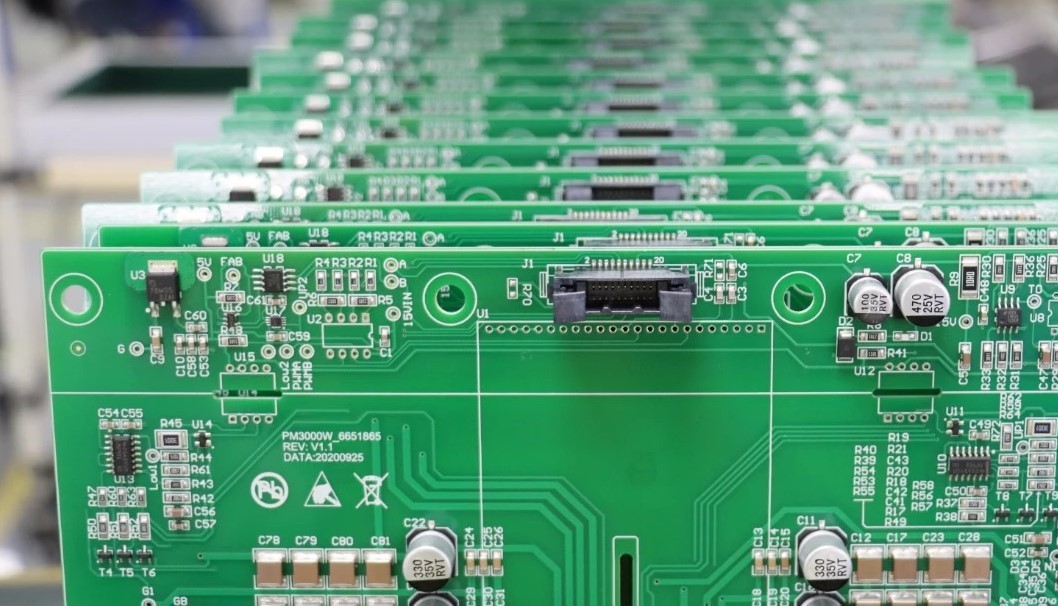
1. How to Control Temperature
Proper temperature control begins with selecting the right tools and settings. A soldering iron with temperature adjustment capabilities is the ideal choice, allowing operators to adapt the temperature according to the different soldering materials and components. Additionally, the following points are also very important:
- Preheating: Ensure the soldering iron is fully preheated to the set temperature to guarantee stability when soldering begins.
- Calibration: Regularly calibrate the soldering iron's temperature settings to address any deviations, especially after extended use.
- Cleaning: Keep the soldering iron tip clean, as oxidation and contaminants can affect heat transfer efficiency.
- Monitoring: Regularly check the actual temperature using a thermal imager or a dedicated soldering iron temperature tester to ensure accuracy.
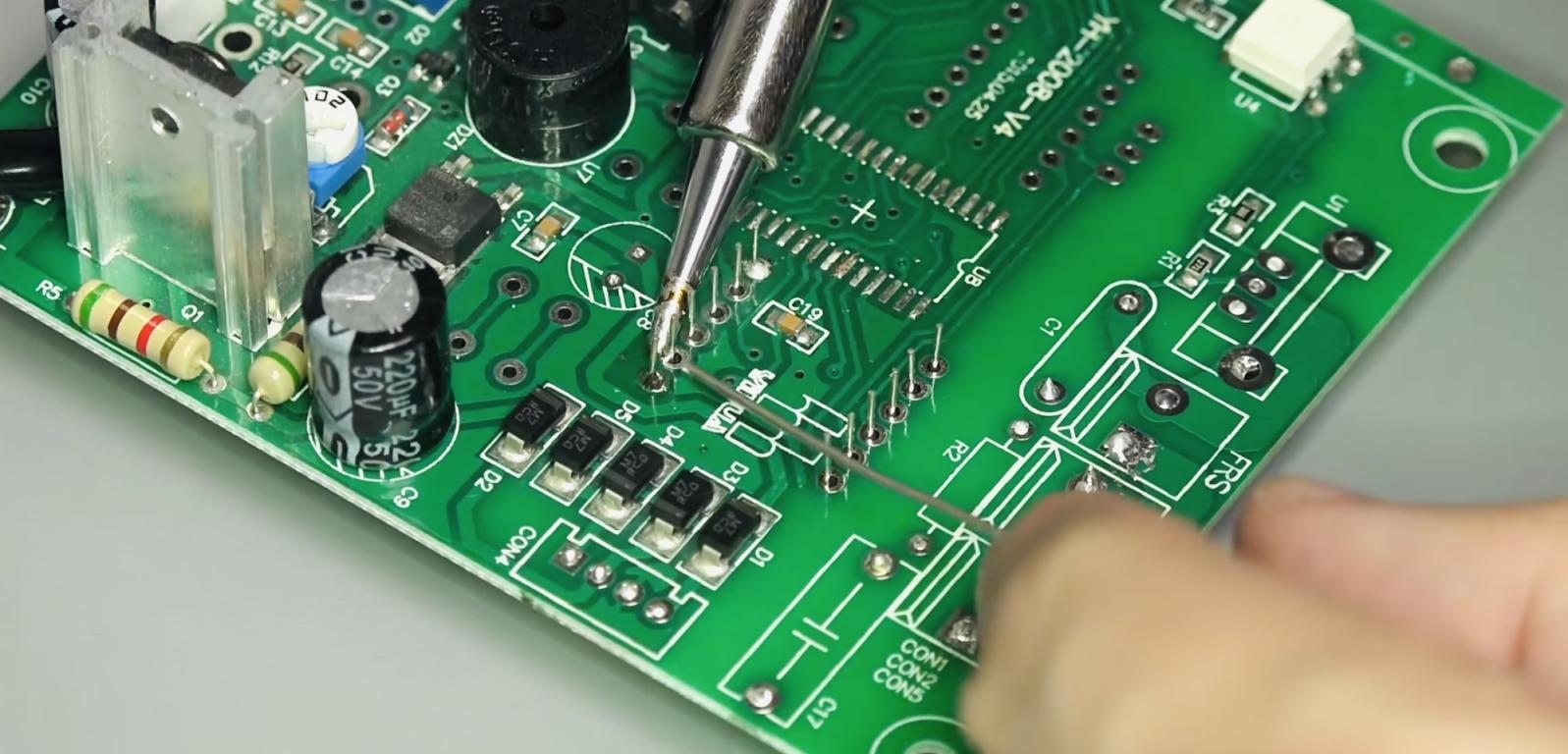
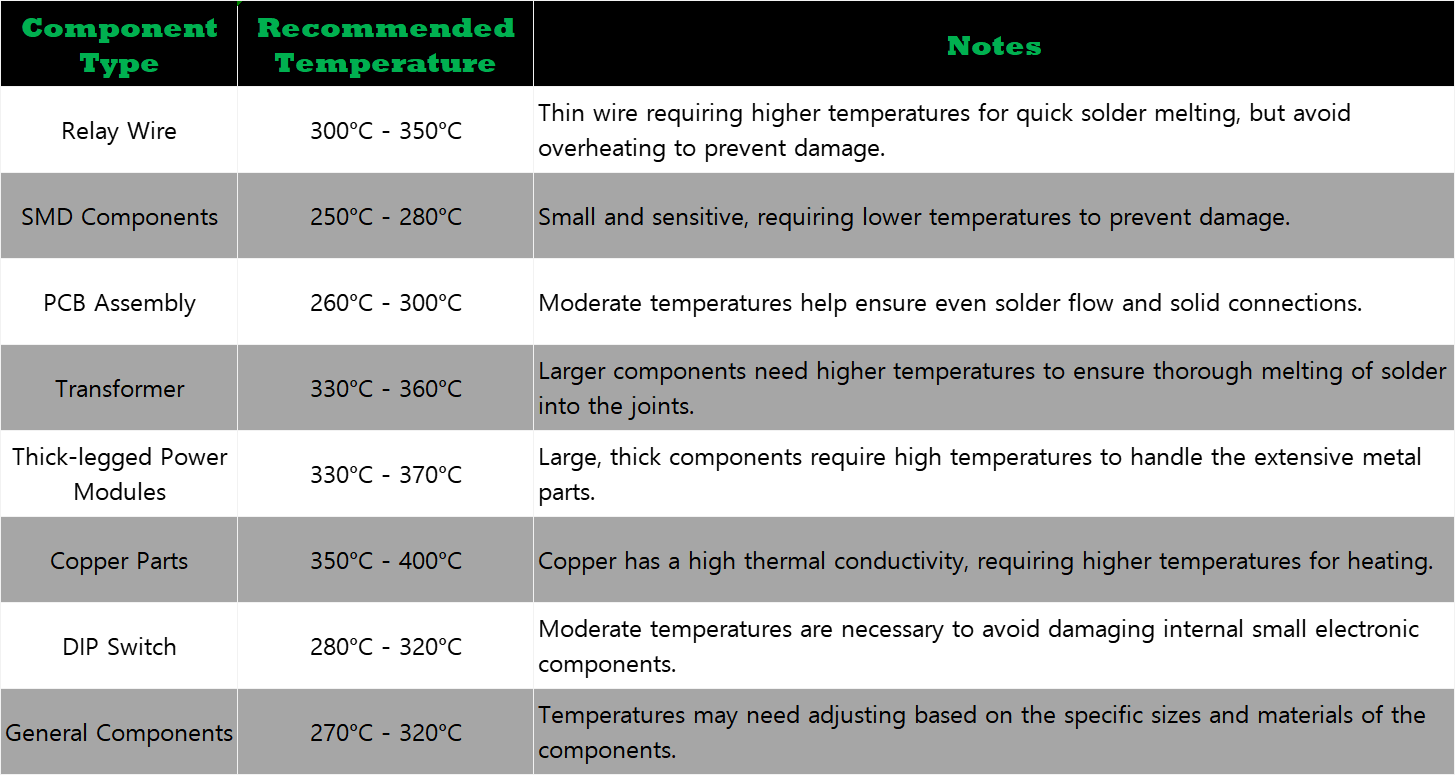
2. Soldering Temperature Requirements for Different Materials and Components
The table below lists the recommended temperature ranges for soldering various common materials and components:
3. Problems Caused by Excessive Temperature
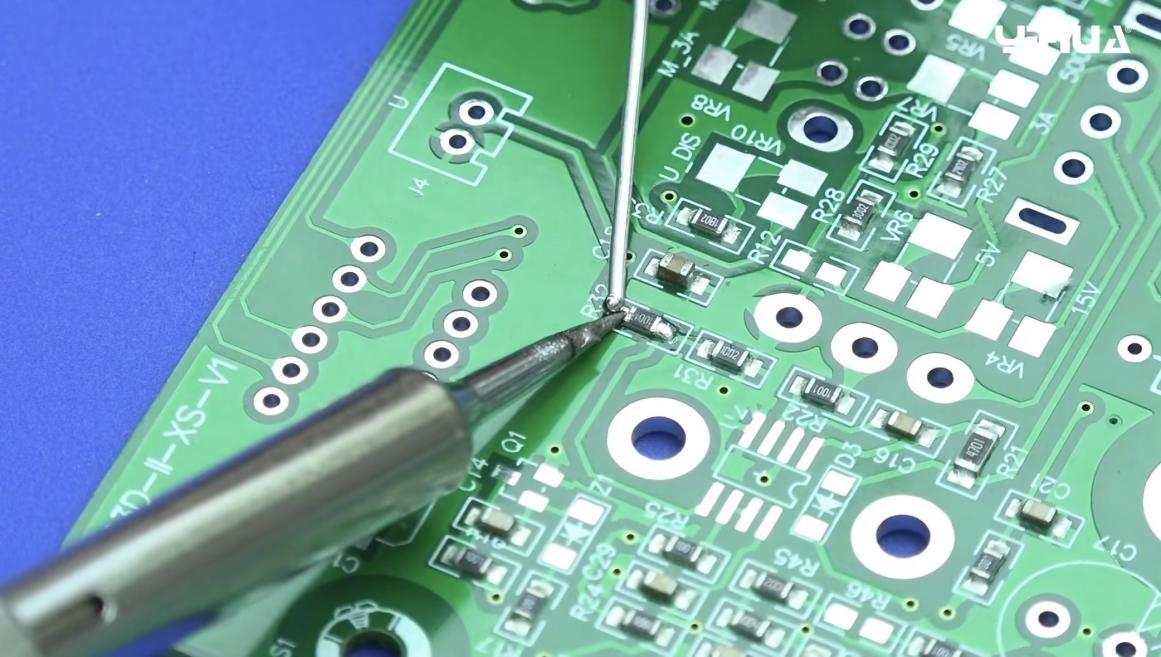
Setting the temperature too high can lead to a variety of problems that affect both the quality of the soldering and safety, including:
- Weak Solder Joints: Excessively high temperatures can cause solder to flow too much, resulting in cold solder joints.
- PCB Damage: High temperatures can cause thermal damage to PCB materials, such as delamination of copper layers or warping of the substrate.
- Component Damage: Sensitive electronic components can be damaged by high temperatures, affecting device functionality.
- Health Risks: Higher temperatures exacerbate the oxidation of solder and flux, increasing the release of harmful gases.
In conclusion, precise control of the soldering iron temperature is crucial for ensuring product quality and operational safety in soldering tasks. At Dadao Electric Co., Ltd. (DDKJ), we strictly control the temperature of the soldering iron, reducing quality issues from the source and protecting the safety of operators.
How Does a Wireless Temperature Meter Work?
Dadao Electric Co., Ltd proudly unveils the advanced technology behind its innovative wireless temperature meters, designed to provide reliable and efficient temperature monitoring for a wide range of applications. These cutting-edge devices combine precision sensing, wireless data transmission, and user-friendly interfaces, ensuring seamless monitoring in industrial, commercial, and home environments.
Read MoreWhat is a Wall-Mounted Energy Meter?
A Wall-Mounted Energy Meter is a digital electrical measuring device designed to be installed directly on a wall surface for easy monitoring of electricity consumption. Unlike traditional DIN-rail meters that are mounted inside distribution boxes, wall-mounted energy meters are ideal for standalone installation in homes, offices, small factories, shops, villas, and renewable energy systems.
Read MoreAnalog vs. Digital: Why Analog Voltmeters are Still Crucial in 2026?
In an era dominated by high-speed processors and crystal-clear digital displays, a classic tool continues to hold its ground on the workbenches of elite engineers: the Analog Meter.
Read More